Showing posts with label San Diego Living. Show all posts

Friday, April 8, 2016

11965 Ericas Way

11965 Ericas Way 92040
2 bedroom 2.5 bath 1806 SqFt 
$649,000

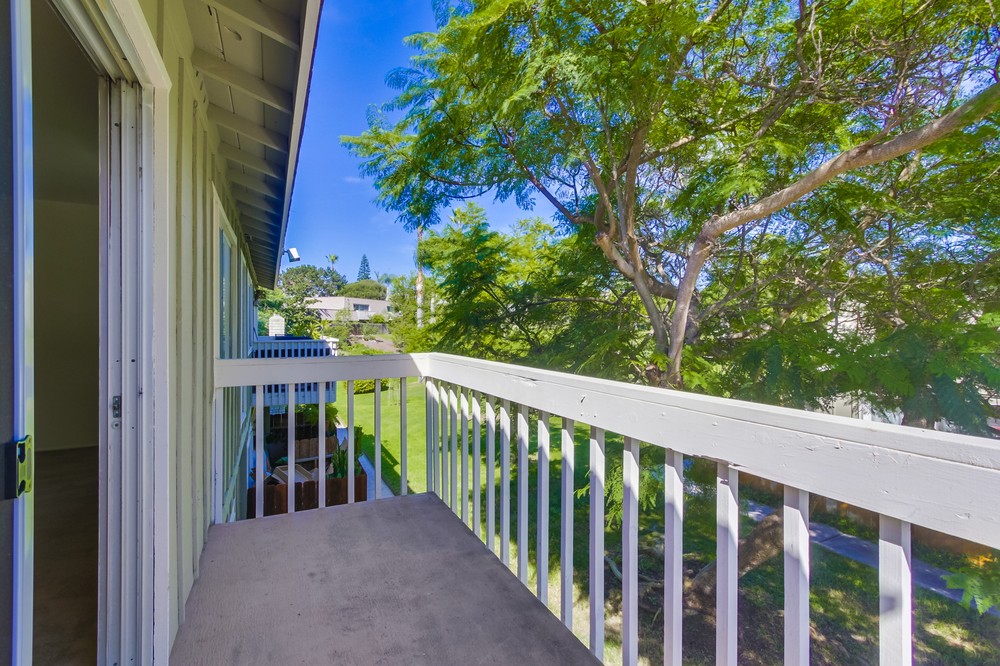
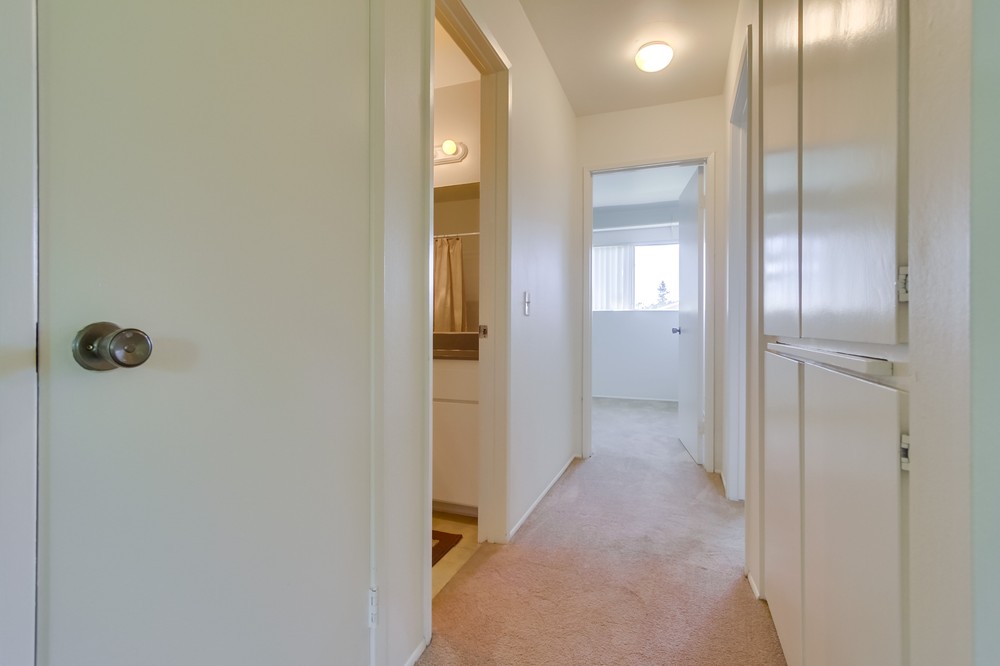
Welcome to Eucalyptus Hills! This custom built home has dream views and over two acres of useable land. The home features upgraded kitchen with new granite counters, stainless steel appliances, custom tile back splash, and new cabinets. The kitchen flows into the living room for ease of entertaining. Living room features stone fireplace, 60in Pioneer Kuro Plasma with surround, two double doors to the back yard and big windows to take full advantage of the views.  The master bedroom has a walk-in closet, attached bathroom suit, and double doors to the back yard. Eucalyptus Hills is known for its views of mountains, san Vicente Dam, and out door activities. San Vicente Dam is only 7 miles away. 


Wednesday, April 6, 2016

California is first state to approve $15 minimum wage

California has become the first state in the nation to approve a statewide $15 minimum wage.

Both the State Assembly and State Senate passed the measure on Thursday afternoon. Governor Jerry Brown said he would sign it on Monday. 
"No one who is working full time in California should live in poverty due to a low wage," said Democratic State Senator Mark Leno, who cosponsored the bill. 
The measure will raise the state's minimum wage to $10.50 in January and to $11 in January 2018. It will then increase by an additional $1 per hour every year until it reaches $15 in 2022. If, however, the state goes through an economic downturn or budget crisis, the governor may choose to slow the implementation. 
The final bill gives small businesses, with 25 or fewer employees, an extra year to implement the increases. 
About 5.6 million Californians, or about 32% of the state's workforce, currently live on the minimum wage, according to Kevin De Leon, the president pro tempore of the state senate. 
Los Angeles has already agreed to increase the minimum wage to $15 per hour by 2020, making it the largest city in the nation to do so. San Francisco plans to reach a $15 minimum by 2018. And other major California cities, including San Diego and Oakland, have raised their minimum wages as well. 
california minimum wage
Setting a minimum wage at $15 has plenty of critics. 
"California may be the first state to pass a $15 minimum wage, but it will also be the first to find out why that's a bad idea," said Michael Saltsman, research director of the Employment Policies Institute, a conservative think tank opposed to minimum wage hikes. He argues that many businesses will have to cut staff or close because of the deal. "This pain from a $15 minimum wage will only be exacerbated in more troubled counties in the state." 
California's current statewide minimum wage of $10 per hour is already among the highest in the country. It's tied with Massachusetts and is second only to Washington D.C., which has a $10.50 minimum, according to the National Council of State Legislatures
New York lawmakers also made a minimum-wage move Thursday. Gov. Andrew Cuomo and the state's legislative leaders in Albany announced they have come to an agreement that will eventually raise the state's minimum wage to $15 for everyone. New York state already requires large food franchises to pay at least $15 per hour

Friday, January 8, 2016

10 Things You Absolutely Need To Know About Buying A Home

Ready to buy a home? Buying a home is one of the most significant financial decisions you’ll make in your lifetime. From figuring out pricing to why you should consider a realtor, here are 10 Things You Absolutely Need To Know About Buying A Home:


1. Use a trusted realtor. We all know that realtors get a cut of the sales price of a home which makes some buyers hesitant to use a realtor: they believe it drives up the overall cost. Keep in mind that the seller, not the buyer, pays the commission. Cory Wilcox, real estate agent at Keller Williams in San Diego, says that potential buyers should keep in mind that a listing agent (the agent representing the seller) doesn’t protect your interests and “that agent would simply pocket both sides of the commission.” That means that you’re not saving money. A savvy realtor who works for you can protect your interests and guide you through the buying process from negotiating a price to navigating home inspections.

2. Remember that a house purchase involves a contract. When you’re buying a house, there are papers to sign. And more papers to sign. Many of those papers – which are actually contracts – look like “standard” home buying contracts with no room for negotiation. That isn’t true. Contracts are meant to be negotiated. You don’t have to sign a standard agreement. If you want more time to review your inspection, wish to waive a radon test or want to make a purchase subject to a mortgage approval, you can make that part of the deal. That’s where a savvy realtor can help. See again #1.

3. Don’t necessarily buy for the life you have today. Chances are that buying a house will be one of the bigger financial commitments you’ll make in your lifetime. Before you agree to buy what you think might be your dream house, consider your long-term plans. Are you planning on staying at your current job? Getting married? Having kids? Depending on the market and the terms of your mortgage, you may not actually pay down any real equity for between five and seven years: if you aren’t sure that your house will be the house for you in a few years, you may want to keep looking.

4. Think about commitment. I’m not talking just about your mortgage. When you get married, the laws of your state generally determine how your assets are treated – and ultimately how they’re distributed at divorce. The same rules don’t necessarily apply when you’re not married. That means you need to think long term. When you buy a house with your significant other who is not your spouse, make sure you have an exit plan if things don’t go the way you hope. It’s a good idea to have an agreement in place with respect to titling, mortgage payments and liability, repairs and the like: it’s best to get it in writing (and yes, I’d recommend getting a lawyer).

5. Look beyond paint. It’s often the case that your dream house has that one room that you’re already fantasizing about changing. Willmes says to remember that it’s fairly inexpensive to fix cosmetic issues (a bit of paint or some wallpaper) but making changes to kitchens and baths can be expensive. She says, “People tend to focus on the cost of cabinets, appliances and counters but sometimes forget about the cost of labor which can double to triple the cost.” That doesn’t mean that you should give up on a house in need of a significant fix but you should factor in those costs when determining whether you can afford to buy.

6. Buy the house you know that you can afford. This can be different from the price that your mortgage company believes that you can afford. When my husband and I bought our first house, we were approved for a mortgage of about three times more than we ultimately ended up spending. Fresh out of law school and working for established firms, our finances looked good on paper. But we dialed back our expectations because we weren’t convinced that our income and expenses would remain at those levels. We were right: two years later, we started our own business just as the economy turned south. The less expensive house meant that we could still make our payments even with less income in pocket. So what’s the best ratio to use? Some lenders suggest that you can afford mortgage payments totaling about 1/3 of your gross income but others suggest closer to 28% for housing related costs including mortgage, insurance and taxes. There are a number of factors including your projected income, interest rates, type of mortgage and the market. Ask your mortgage broker to help you understand what’s in play.

7. Don’t fixate on the purchase price. The purchase price is just one piece of owning a house: be sure to consider all of the costs associated with your potential new home. That includes the cost of insurance, homeowner association fees and real estate taxes – depending on where you live, those can quickly add up. And it’s not just home improvements that can cost money: maintenance costs dollars, too. It’s a good idea to ask questions about upkeep for extras like swimming pools, fancy heating and cooling systems and out buildings. Finally, Willmes suggests that you make sure you’re comparing apples to apples: a condo with a large fee that’s priced low may be more costly than a higher priced one with lower fees while a cheap home with high taxes may cost you more a month than a more expensive one with lower taxes.

8. Consider your student loan debt. Following the housing crisis, lending laws tightened. Student debt isn’t merely an annoyance: it’s treated like real debt. Aleyna Groves, a licensed Mortgage Broker at Movement in Ca, explains that a major revision to FHA guidelines in 2015 negatively affects many first-time homebuyers with student loan debt. Prior to this change, a borrower with student loans deferred for more than 12 months could discount that debt from their liabilities: now, for purposes of determining purchasing power, a borrower is charged with 2% of the outstanding balance of the student loan regardless of deferment status (in a non-FHA, or conventional loan, it’s just 1%). If your student loan is in deferment and you’re planning on buying a home, Griesser suggests enrolling in a properly documented income-based repayment plan so you have the documents your lender will need to properly assess your ongoing liability.

9. Don’t get carried away by the home mortgage interest deduction. Many taxpayers are tempted to buy more house than they can afford by figuring that they’ll save enough with the home mortgage interest deduction to make up for it. The mortgage interest deduction is only deductible if you itemize on your Schedule A: only about 1/3 of taxpayers claim the itemized deduction. You itemize if your deductions exceed the standard deduction: for 2015, the standard deduction rates are $12,600 for married taxpayers filing jointly and $6,300 for individual taxpayers (those rates stay put for 2016). Assuming that you do itemize, remember that your out of pocket will still be more than your tax savings (if you’re in a 28% bracket, paying $5,000 more in interest will only “save” you $1,400 in taxes). And you can’t count on the same level of savings forever: mathematically, the longer you own your house, the less you will owe in interest. That’s good for building your equity but it means a smaller deduction come tax time.

10. You don’t have to buy a house. There’s no rule that says you have to buy a house by the time you’re 35 – or ever. Buying a home is a big decision and while it can be a sound financial investment, it’s not for everyone. There is a lot to consider, including the housing market, interest rates, timing and your future plans. You might want more flexibility or mobility, or your career and family plans may be in flux. If you’re not sure about a neighborhood, consider renting as a test drive: a realtor can help you with that, too (see again #1). Even then, you don’t have to pull the switch: there are healthy rental markets throughout the country and in some areas, young professionals are choosing rentals over homebuying to preserve cash and remain mobile. That’s showing in the stats: last year, the U.S. Census Bureau reported that the home ownership rate was 64.9%, not counting borrowers in risk of default. In contrast, ownership in 2010 was nearly 69% (downloads as a pdf): for purposes of context, a one-percent change in the ownership represents well over a million homeowners. For more on the decision to buy versus rent, check out my book, Home, Sweet Rental: Busting The Hype Of Homeownershipavailable on Amazon.

Wednesday, January 6, 2016

2015 Real Estate Review

Last year was a great year for Real Estate in San Diego and 2016 is just going to get better. In 2015 San Diego sold $15,105,240,866. Thats right 15 BILLION! The average home sale was $675,004 and average day on market was 40. (this is only the detached housing market) The biggest home sale was 7007 country club drive La Jolla listed for $19,800,000 and selling for $17,000,000 cash!


6266 Camino De La Costa - On the market for $15,500,000 selling in 
6 days for $14,300,000 cash! 


6102 Camino De La Costa - On the market for $12,500,000 selling in 
330 days for $12,450,000 cash!


9046 La Jolla Shores Lane - On the market for $13,599,000 selling in 
49 days for $12,000,000 Cash!


341 Sea Ridge - On the market for $12,500,000 selling in 
1 day for $11,500,000 Cash!


310 Dunmore Drive - On the market for $12,980,000 selling in 
21 days $11,400,000 Cash!


15651 Puerta Del Sol - On the market for $36,000,000 selling in 
42 days for $11,200,000 Cash!


3006 SANDY LANE - On the market for $12,995,000 selling in 
133 days for $11,000,000 Cash!


17025 Sobre Los Cerros - On the market for $10,250,000 selling in 
158 days for $9,300,000 Cash!


2611 Crown Crest Lane - On the market for $9,200,000 selling in 
1 day for $9,000,000 Cash!

Call cory today for more info on any of these properties. Also if your looking to
buy or sell call me 760-707-6021 corywilcoxre@gmail.com


Thursday, September 24, 2015

808 Regal 6J Encinitas 92024

Encinitas Living!

open house Saturday 10-2


808 Regal Rd 6J Encinitas Ca 92024
$345,000
2 Bedroom 1 Bath 769 SqFt. 

Rare opportunity in the heart of Encinitas, minutes from the freeway, close to the new 44-acre Encinitas Community park, Encinitas library, and walking distance to the beach. This condo is in a beautiful gated community with laundry facilities on site, expansive grassy lawn's, clubhouse, pools, and much more. Get your kids in one of the best school districts San Diego has to offer. Encinitas is home of world renowned yoga studios, dining, beaches and it's active lifestyle.


You get to live in beautiful Encinitas for under $400k!


WELCOME HOME!

Call me today 760-707-6021